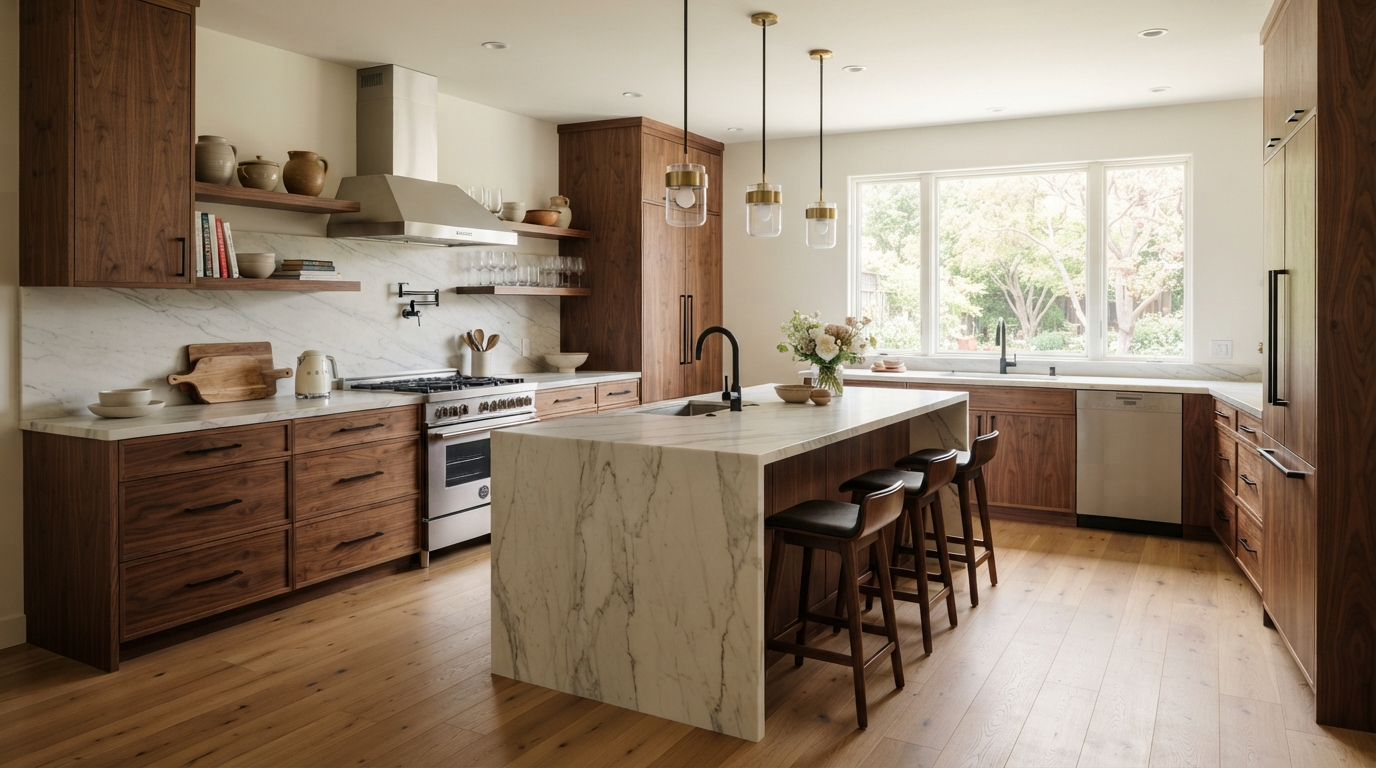
Kitchen and bathroom projects in the Yakima Valley tend to follow the seasons. Homeowners start planning in late winter, gather quotes through spring, and schedule installation before the fall harvest slows down local contractor availability. Cabinetry is usually the first decision made and the last one finished, since it shapes everything from countertop dimensions to lighting placement.
What “Custom” Actually Means for Cabinets
Not every cabinet labeled “custom” is built from scratch. In the industry, there are three general categories: stock, semi-custom, and fully custom. Stock cabinets come in fixed sizes and limited finishes, ready to install within days. Semi-custom cabinets use a base framework but allow changes to width, height, drawer configuration, and finish. Fully custom cabinets, sold as Custom Cabinets, Yakima WA homeowners typically request, are built to the exact dimensions of a kitchen or bath, down to a quarter inch, with no size limitations from a factory template.
The distinction matters because it affects both price and lead time. A fully custom order usually takes six to twelve weeks to build, compared to one to three weeks for stock. Homeowners working around an older Yakima farmhouse with uneven walls or a narrow galley kitchen often need the flexibility that only true custom work provides.
Common Situations That Call for Custom Work
- Kitchens with non-standard wall lengths or angled corners common in homes built before 1970
- Islands that need to match an existing layout rather than a factory size
- Built-in pantries, mudroom lockers, or window seats that require exact millwork
- Matching cabinetry color and grain to existing woodwork during a partial remodel
Storage and Layout Features Worth Considering
Custom construction opens up storage options that stock cabinetry simply cannot offer, since every box is built to the exact opening rather than a standard size. A corner that would otherwise waste six or eight cubic feet of dead space can instead hold a pull-out shelving system or a diagonal lazy Susan built to the precise angle of the room. Deep drawers in place of swinging doors have also become one of the most requested changes during kitchen redesigns, largely because they make pots, pans, and small appliances easier to access without kneeling on the floor.
Vertical space tends to get overlooked in older Yakima homes with standard eight-foot ceilings. Adding a stacked upper cabinet, even a shallow one meant for rarely used items, can recover storage without expanding the kitchen’s footprint. Pull-out spice racks next to a range, tray dividers built into a lower cabinet, and a dedicated trash and recycling pull-out are smaller details that rarely show up on a stock cabinet order sheet but come standard on many custom requests.
Storage Add-Ons Homeowners Often Request
- Pull-out pantry units for kitchens without a dedicated walk-in pantry
- Vertical tray and cutting board dividers built into base cabinets
- Charging drawers with built-in outlets for small electronics
- Mixer lifts that raise a stand mixer to counter height from a lower cabinet
Bathroom cabinetry benefits from the same approach, though on a smaller scale. A vanity built to the exact width of a bathroom, rather than trimmed down from a standard size, avoids the awkward gaps that sometimes appear next to a toilet or shower enclosure in older Yakima homes with narrower floor plans. Linen storage built into an adjacent wall cavity, where framing allows, can also recover space that a freestanding cabinet would otherwise take up on the floor.
Material and Finish Choices Around Yakima
Wood species selection in this region often comes down to climate and budget rather than trend alone. Hardwoods like maple and cherry hold up well to the dry summers and cold winters typical of Central Washington, since they resist warping better than softer woods when humidity swings between seasons. Alder, a Pacific Northwest staple, remains popular locally because it is regionally sourced and takes stain evenly, which keeps material costs lower than imported hardwoods.
Paint-grade cabinets built from maple or poplar continue to outsell stained wood finishes nationally. According to the 2024 U.S. Houzz Kitchen Trends Study, white remains the most requested cabinet color, though muted greens and navy tones have gained ground in recent renovation surveys. Two-tone kitchens, where the island differs from the perimeter cabinetry, are also a frequent request among homeowners updating older ranch-style homes in the valley.
| Cabinet Type | Typical Lead Time | Best Suited For |
|---|---|---|
| Stock | 1–3 weeks | Rentals, quick flips, standard room sizes |
| Semi-custom | 4–6 weeks | Most kitchen remodels with minor layout changes |
| Fully custom | 6–12 weeks | Older homes, unusual layouts, built-ins |
Budgeting for a Cabinet Project
Pricing varies more than most first-time buyers expect. National data compiled from the 2025 Cost vs. Value Report puts cabinets and labor together at roughly 30 to 50 percent of a full kitchen remodel budget, and per-linear-foot pricing for new cabinetry commonly ranges from about $100 to over $1,200 depending on material and construction method. Stock cabinets sit at the low end of that range. Fully custom hardwood cabinetry with dovetail joinery and soft-close hardware sits at the high end.
A minor kitchen remodel, which typically includes cabinet refacing rather than full replacement, carries a national median cost around $28,000 according to the same report, with an average return on investment above 100 percent at resale. Full replacement projects cost considerably more but also allow layout changes that refacing cannot address, such as adding drawer stacks in place of lower cabinet doors or reworking a corner for better access.
Questions Worth Asking Before Signing a Contract
- Is the box construction plywood or particleboard, and what thickness?
- Are drawers built with dovetail joints or stapled construction?
- What is the warranty on hinges, hardware, and finish?
- Who handles installation, and is that labor included in the quote?
Local labor rates in the Yakima area tend to run below the Puget Sound region, which can offset some of the higher material costs tied to custom orders. Getting at least three itemized bids remains the most reliable way to compare pricing, since quotes that bundle labor and materials together make it difficult to spot where costs differ.
Financing is another factor that shapes the final decision for many households. Some cabinet shops offer payment plans tied to production milestones, such as a deposit at order, a second payment when materials arrive, and a final balance at installation. Homeowners rolling cabinetry into a larger remodel loan should confirm whether the lender releases funds in stages or as a lump sum, since cabinet shops rarely begin production without at least a partial deposit in hand.
Planning Around Local Timing and Permits
Central Washington’s building season runs roughly from March through October, and contractor schedules fill up quickly once the weather turns. Ordering custom cabinets in December or January, even for a project planned for spring, gives the shop enough lead time to avoid the seasonal backlog that hits most Yakima-area contractors between April and August.
Most cabinet installation itself does not require a separate permit in Yakima County, since it falls under interior finish work. However, projects that involve moving plumbing or electrical to accommodate a new layout, such as relocating a sink or adding under-cabinet lighting circuits, typically do require permits through the local building department. Confirming this early avoids delays once cabinets are already built to a layout that inspectors have not approved.
What Happens During Installation
Installation day tends to move faster than the ordering and building process that precedes it, which surprises some first-time buyers. A typical kitchen’s worth of cabinetry, once delivered, installs in two to four days depending on the project’s size and whether crown molding, fillers, or panel trim pieces are part of the order. Installers generally start with upper cabinets, since working overhead is easier before base cabinets and countertops are in the way, then move to base cabinets and finish with trim and hardware.
Delivery timing matters as much as the installation itself. Cabinets sitting in a garage or unfinished space for weeks before installation run some risk of temperature and humidity exposure, particularly during Yakima’s colder months when an unheated garage can swing well below the interior temperature of the home. Scheduling delivery close to the actual installation date, rather than weeks in advance, reduces that risk.
Countertop templating usually happens after base cabinets are installed and leveled, not before, since even small variations in cabinet height or depth affect the final countertop measurements. This is one reason full kitchen remodels often take longer overall than homeowners initially expect: cabinets, countertops, and backsplash work happen in sequence rather than all at once, with each step depending on the one before it.
Final Thoughts
Cabinet choice sets the tone and function of a kitchen for the next fifteen to twenty years, so matching the build type to the home’s actual layout matters more than chasing a specific style trend. Homeowners who compare detailed, itemized quotes tend to end up with fewer surprises once installation begins.